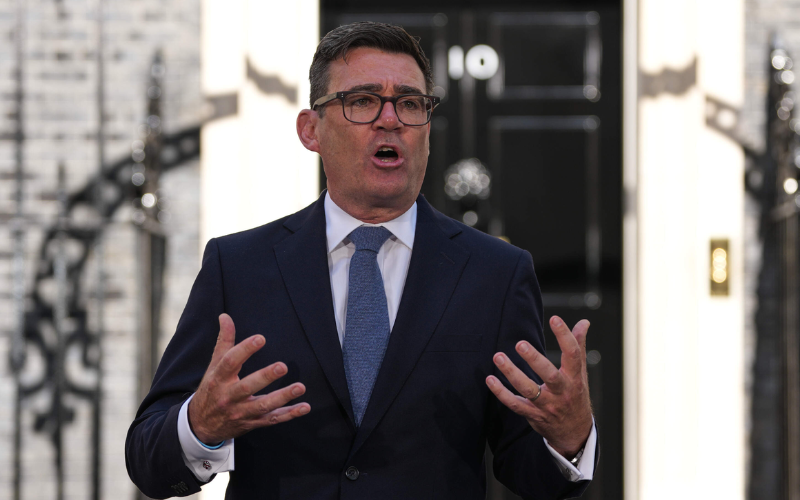
Andy Burnham takes over as UK prime minister, unveils new Cabinet [Courtesy]
Labour leader Andy Burnham has become Britain's new prime minister after Keir Starmer stepped down.
According to BBC, King Charles III formally asked Burnham to form a government at Buckingham Palace after Starmer's resignation.
In his first address outside 10 Downing Street, Burnham said Britain needed major change, arguing that politicians had failed to deliver for the public.
He described the moment as a "circuit breaker" for the country and pledged sweeping reforms to politics and the economy.
"I wanted politics to be more about solving problems and less about scoring points," he said, promising to give more power to local communities, support British industry through public investment, and bring essential services under stronger public control.
'I have accepted his Majesty the King's invitation to form a government'
Andy Burham pledges to help cost of living crisis in his first speech as Prime Minister pic.twitter.com/bC4RgaxaZG
Burnham also said the government would soon unveil measures to ease the cost of living and publish a 10-year national plan later this year.
Shortly after taking office, the 56-year-old unveiled his new Cabinet. Former Defence Secretary John Healey was appointed Chancellor of the Exchequer, replacing Rachel Reeves, who left the government.
Other key appointments included Ed Miliband as Foreign Secretary, Shabana Mahmood retaining her position as Home Secretary, Louise Haigh taking on several senior Cabinet roles, Yvette Cooper becoming Health Secretary, and Pat McFadden remaining Work and Pensions Secretary.
Angela Rayner also returned to the Cabinet as housing, communities and local government secretary after resigning in 2025 over a tax breach. Jonathan Reynolds was named business secretary, while Wes Streeting became defence secretary.
Burnham is no stranger to British politics.
He has previously served as culture secretary, health secretary and mayor of Greater Manchester.
He unsuccessfully contested the Labour leadership twice before finally securing the position after winning a by-election in June and being elected Labour leader on July 17.
Burnham now takes office facing significant challenges, including sluggish economic growth, rising living costs, mounting pressure on public services, and a deeply divided political landscape.