×

The Standard e-Paper
Join Thousands of Readers





Audio By Vocalize
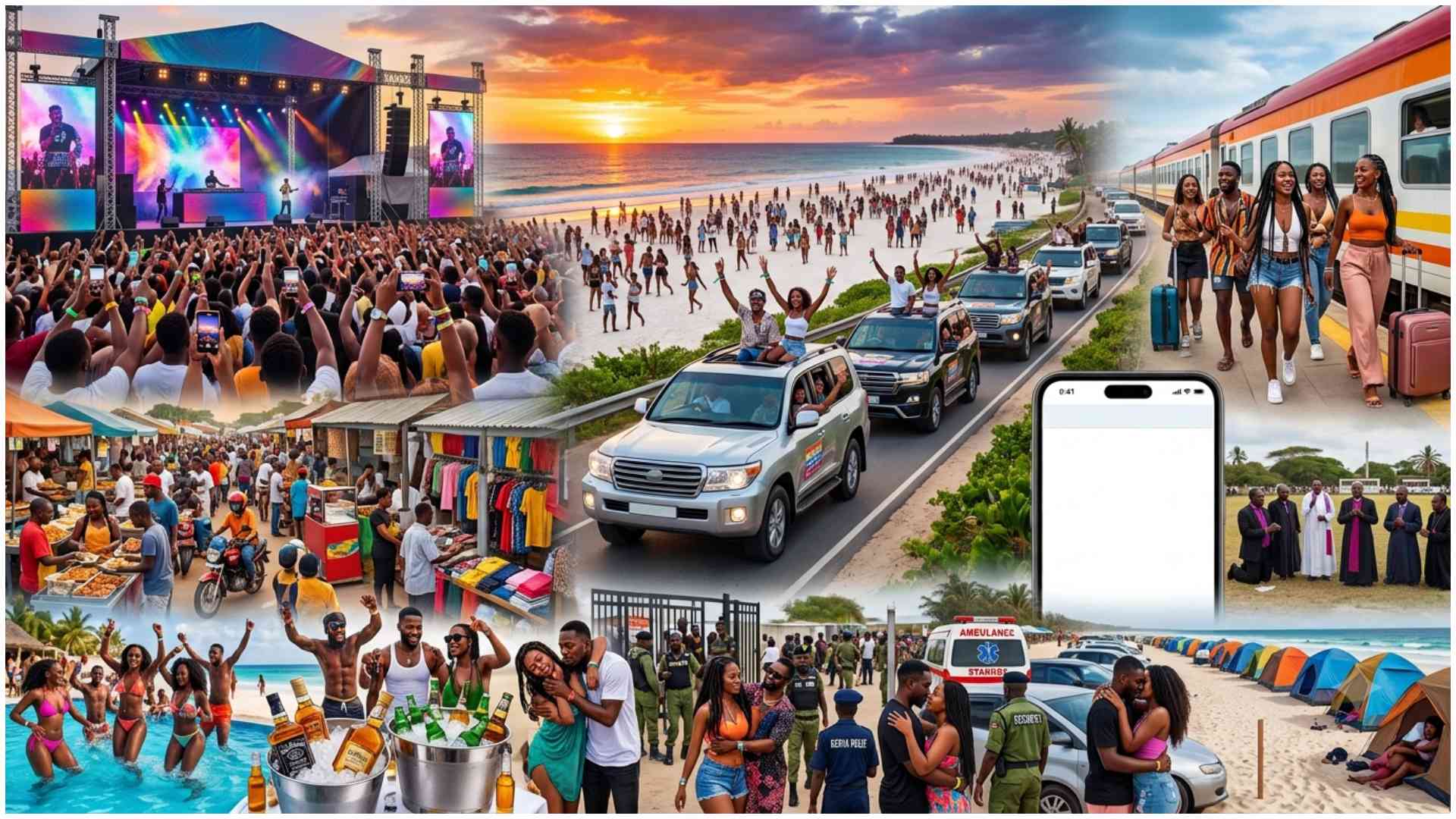
By the time the first beats dropped at Lost Beach Bar, Restaurant and Club in Malindi, Summertides 2026 had long become one of the most talked-about events in Kenya.
For weeks, social media platforms had been flooded with preparations for the annual beach festival.
TikTok and Instagram timelines were awash with videos of salon appointments, fresh hairstyles, shopping hauls, packed suitcases and countdown posts as thousands of young people prepared for a pilgrimage to the Coast.
The excitement extended beyond social media. Videos captured groups of revellers singing and dancing aboard the Standard Gauge Railway (SGR), turning the journey to Malindi into part of the festival experience itself.
Then, on July 2, the crowds arrived.
A convoy of high-end vehicles carrying young men and women perched on rooftops, hanging from doors and waving festival wristbands snaked into the coastal town. Others arrived by plane. Airlines reportedly operated at full capacity, with some adding extra flights to meet demand.
For a town that has spent decades trying to revive its tourism fortunes, the transformation was dramatic.
Hotels, guest houses, Airbnbs and even private residences were fully booked more than a week before the festival. Accommodation that would ordinarily struggle to attract guests found itself sold out as thousands descended on the resort town.
According to organisers, more than 20,000 people attended the three-day festival, with approximately 15 per cent travelling from outside East Africa. Many attendees had booked tickets and accommodation months in advance.
“Immediately after the Diani Summertide Festival, people started saving for this year’s Malindi event and a good number booked by January,” one organiser told TNX.
Ticket prices ranged between Sh3,000 and Sh6,000 depending on when they were purchased, and all available tickets sold out before the event.
The economic impact was immediate and substantial.
Festival organisers estimate that visitors spent an average of more than Sh20,000 each on transport, accommodation, food, drinks and entertainment, injecting over Sh400 million into the local economy within three days.
“The least amount revellers spent was Sh20,000, and if we do the maths, you find that the Malindi economy earned over Sh400 million in three days,” an organiser said. “Business people are urging us to organise another event soon.”
The spending boom was felt across the town.
Restaurants operated at full capacity. Food vendors, boda boda riders, bars, clothing traders and beach operators reported some of their busiest days in recent memory. Organisers revealed that demand was so high that supplies ran out on the first day.
“The turnout exceeded our expectations to the point that our consumable stock was wiped out during the first day, forcing us to source additional supplies from Nairobi and Mombasa,” one organiser said.
Inside Lost Beach, the atmosphere reflected the scale of the event.
Two large stages hosted a rotating lineup of DJs and performers who kept the music flowing from afternoon until dawn. Revellers moved between Afrobeat, Amapiano, Gengetone, reggae and dancehall sets, while others cooled off in the swimming pool before returning to dance on the sand.
The festival featured performances by some of Kenya's most recognisable entertainers, including Joe Mfalme, Creme de la Creme, G Money, DJ Daffy, MC Gogo, Tina Ardour, City Girl, Big Nyagz and Suraj, among others.
Beyond the music, attendees enjoyed beach games, water sports, food courts, beach bars and the famous sunsets of the Indian Ocean.
For many, the festival delivered exactly what they had hoped for.
“The energy was unbelievable,” said one reveller. “Everyone was singing, dancing and enjoying the beach atmosphere. It was definitely the highlight of my weekend.”
Yet while the economic benefits and entertainment value were widely celebrated, Summertides 2026 soon became the centre of a very different conversation.
As the festival unfolded, social media platforms filled with videos that appeared to show excessive drinking, revealing outfits and other behaviour that quickly ignited debate across the country.
Some clips showed revellers dancing in swimwear and bikinis, while others captured individuals consuming large quantities of alcohol.
Several videos appeared to show attendees heavily intoxicated, being assisted by friends back to their accommodation.
Accommodation shortages also became a talking point.
With demand far exceeding supply, some attendees reportedly found themselves stranded after failing to secure suitable lodging.
Social media videos appeared to show people sleeping on beaches, while others documented multiple guests sharing villas and apartments to reduce costs.
For Panessa Wanjala, one of the more surprising aspects of the festival was the financial reality behind the glamorous social media posts.
“Despite many people arriving with expensive phones and fashionable outfits, I noticed many were struggling financially once they got there,” she said. “I saw groups sharing meals to save money and apartments meant for one or two people accommodating six or more.”
Other stories emerged from festivalgoers themselves.
Felix Ochieng claimed he and his friends were approached by women requesting accommodation after saying their lodgings were too far away.
“We also came across several women who were so heavily intoxicated to the point of passing out, and their friends were trying to get them back safely,” he said.
Angel Chebet observed how diverse the festival crowd had become.
“I noticed people from the queer community openly expressing themselves through dance,” she said. “It was something many people around us were talking about throughout the festival."
Some of the most controversial footage circulating online appeared to show couples engaging in intimate acts in parked vehicles and secluded areas. The clips spread rapidly and became central to a growing national discussion about morality, youth culture and the role of social media in modern society.
For Meshak Kamau, who attended after experiencing what he described as “fear of missing out”, the event highlighted both the excitement and contradictions of youth culture.
“Everywhere I looked, people were talking about Summer Tides,” he said. “The nightlife was exciting and the atmosphere energetic. But some of the things I later witnessed and saw online became the main talking point after the festival.”
Faced with mounting criticism, organisers defended the event and insisted that its primary purpose was tourism promotion and economic empowerment.
Lynne the Brand, who oversees publicity for Summertides, said organisers could not be held responsible for every personal choice made by thousands of attendees.
“When we were planning the festival, our aim was never to spread immorality,” she said. “As organisers, we can curate an event, but we have no control over what people choose to do once they are there.”
She argued that the focus on controversial videos had overshadowed the event's wider impact.
“We are also seeing videos of boda boda riders, food vendors and other business people saying the festival transformed their businesses. Many of them had never experienced such sales before.”
According to Lynne, security and safety remained a priority throughout the event. This year's edition featured one of the largest security deployments in the festival's history.
The Kenya Police Service, General Service Unit (GSU), Rapid Deployment Unit (RDU), Kenya Prisons Service, Kenya Forest Service, Kilifi County enforcement officers, Kenya Wildlife Service, Kenya Coast Guard and the Kenya Navy were all involved in maintaining security.
Traffic was rerouted throughout Malindi, while ambulances and medical personnel remained on standby.
Organisers also introduced stricter digital ticket verification systems to combat fake ticket scams and prevent overcrowding.
Despite these measures, criticism continued to grow after the festival.
A group of clergy in Malindi held prayers at Cleopatra Grounds and strongly condemned what they described as indecent behaviour witnessed during the event.
Bishop Thomas Kakala of Jesus Cares Centre Church compared some of the reported conduct to the biblical story of Sodom and Gomorrah.
“We have come here with one message: to condemn prostitution, homosexuality and the shameful acts that were witnessed during the concluded festival,” he said.
He warned that church leaders would mobilise opposition against future editions if similar incidents continued.
Father Kimbi of St Anthony Catholic Church also criticised the event during his Sunday sermon, urging residents to pray and repent.
“We have been hearing loud music from the beach and seeing people walking nearly naked. We should pray for Malindi because we have invited sin into our midst,” he said.
Former Marafa Ward MCA Harrison Kombe, who once tabled a motion seeking to ban indecent dressing in Kilifi County, said the festival had validated concerns he raised more than a decade ago.
“I think as a country we need to recollect ourselves and start thinking about ways of instilling morals in our population,” he said.
Yet not everyone agreed that the controversy reflected a uniquely modern problem.
Digital creator Lydia Muriuki argued that every generation has experienced periods of youthful excess, but today's generation lives under constant digital scrutiny.
“Gen Z, don't let my generation lie to you that you are the most immoral,” she said. “Every generation has had its own madness.”
She pointed to events such as the once-popular Masaku Sevens rugby tournament, arguing that previous generations also engaged in reckless behaviour, but without smartphones documenting every moment.
As the debate continues, Summertides 2026 has evolved into far more than a music festival.
To supporters, it represents tourism growth, youth expression, employment creation and economic opportunity. To critics, it exposed troubling trends around public intoxication, indecency and changing social values.
What remains beyond dispute is the scale of its impact.
For three days, Malindi became the centre of Kenya's entertainment scene, drawing tens of thousands of visitors, generating hundreds of millions of shillings and creating conversations that continue long after the music has stopped.
Whether remembered as a tourism success story or a flashpoint in the country's culture wars, Summertides 2026 has ensured that Malindi, and the debates it sparked, will not be forgotten anytime soon.
Subscribe to our newsletter and stay updated on the latest developments and special offers!