×

The Standard e-Paper
Home To Bold Columnists





Audio By Vocalize
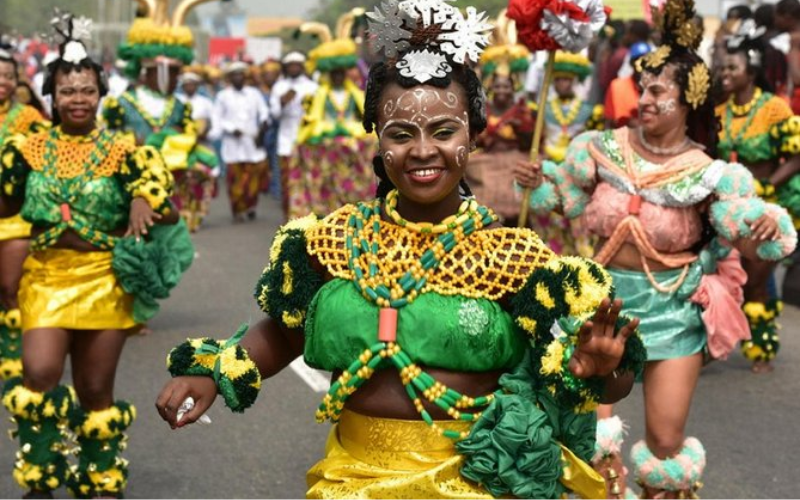
Africa is well known for embracing and upholding ancient and historical ways of life, celebrations and passages. When Africans celebrate, they do more than throw parties; they create unforgettable moments that give the celebrations a living life.
Nowhere is this grand scale of celebration more visible than at Nigeria’s Calabar Carnival, a massive annual gathering that draws millions of visitors to what is often described as Africa’s biggest street party.
Widely regarded as the continent’s largest public celebration, the festival in Cross River State features colourful parades, high-energy music, traditional dance performances and elaborate costumes that reflect Nigeria’s rich cultural diversity, turning Calabar into a global cultural spectacle.
At the heart of the carnival is a highly competitive cultural showcase featuring five heritage bands competing for the coveted Band of the Year title.
Each band is assessed along a 12-kilometre parade route by a panel of adjudicators, who evaluate theme interpretation, choreography, costume design and overall performance energy.
The Masta Blasta, also known as the Orange Band or Family Band, is the largest in terms of membership and is known for its vibrant energy, powerful drumming and massive street presence.
Passion 4, the Green Band, is one of the most successful in the carnival’s history, holding the highest number of wins and earning praise for its refined costume design and strong thematic execution.
The Seagull Band, the Red Band, is widely recognised for its elegance and coordinated performances, often incorporating theatrical elements and featuring appearances by Nollywood stars and public figures.
The Bayside Band, the Blue Band, was founded and traditionally led by former Cross River State Governor Donald Duke, the carnival’s creator. It is known for highlighting African civilisation, regional pride and coastal-inspired themes.
The Freedom Band, the Yellow Band, focuses on themes of emancipation, human rights and liberty. It is also noted for introducing contemporary choreography, acrobatic displays and dramatic storytelling into its parade performances.
Established in 2004 by then Governor Donald Duke, the Calabar Carnival was conceived as a tourism-driven initiative aimed at promoting cultural heritage, stimulating the local economy and positioning Cross River State as a global hospitality destination.
The inaugural edition of the competition was won by the Bayside Band, setting the foundation for what has grown into a globally recognised celebration.
Winning the top prize at the carnival goes beyond performance alone.
Bands are required to interpret an annual theme through creative storytelling, design and choreography.
Organisers have officially unveiled “Rethinking Our Collective Destiny” as the theme for the upcoming 2026 edition, marking the 21st anniversary of the festival.
To modernise the event, the Calabar Carnival Commission is introducing digital streaming frameworks and an online voting system for 2026.
Subscribe to our newsletter and stay updated on the latest developments and special offers!