×

The Standard e-Paper
Read Offline Anywhere





Audio By Vocalize
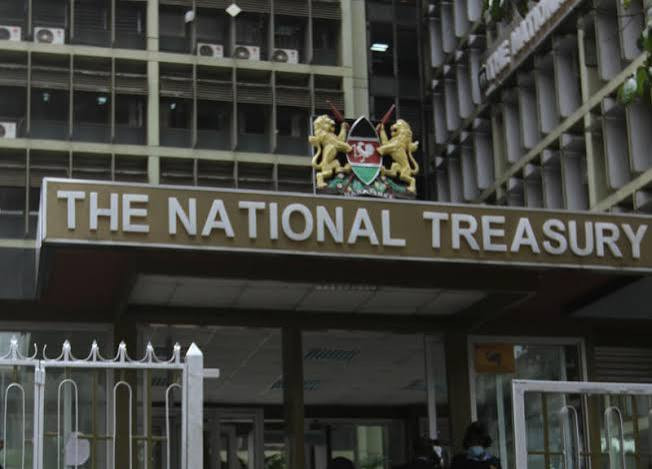
The National Treasury is under the spotlight for diverting Sh30 billion that had been borrowed through issuance of a Eurobond last year to cover shortfalls in domestic borrowing.
Early 2025, the government issued a $1.5 billion (Sh193.9 billion) Eurobond and in its disclosures said the money would be used to buyback and restructure another maturing debt.
However, in a new report by the office of the Auditor General (OAG), the money raised through the Eurobond issued in January 2025 was not entirely used for the settlement of the maturing debt and that Sh30 billion was used to cover shortfalls after an April 2025 Treasury bond failed to raise the expected money. The Auditor General further noted that this is a breach of the information that the government gave to the public including investors who subscribed to the bond.
The Auditor General's Report on National Government for the financial year that ended on June 2025 flagged that only Sh78.32 billion of the total proceeds went toward the designated buyback.
“There was a successful issuance of $1.5 billion at 9.5 per cent rate for amortising notes due in 2036, with the proceeds intended primarily for the liability management or buyback of the Government of Kenya’s $900 million Eurobond,” said the Auditor General in the report.
“However, review of the National Treasury and Economic Planning internal memo to the Director General, Public Debt Management Office, dated May 6, 2025 revealed that out of the Eurobond proceeds raised amounting to Sh188.35 billion ($1.457 billion), a total of Sh78.3 billion was utilised for buyback operations.”
“Out of the remaining Sh110 billion, Sh30 billion was used to cover shortfalls arising from Treasury Bond (domestic debt) proceeds on April 7, 2025 pending disbursement of external resources.”
The report adds that the use of the money for things other than repayment of old debt amounted to breach of contractual obligations. This had been communicated to Treasury following the diversion of the Sh30 billion in a legal opinion.
“The legal opinion presented to the Principal Secretary, National Treasury dated May 15, 2025, the Offering Circular and the Subscription Agreement (both of which form the contractual basis of the subscription) provides that the primary use of the proceeds from the new issue shall be to purchase the 2027 Notes under the buyback as well as for the refinancing of other external indebtedness,” said the AOG.
“In addition, the opinion provides that any material deviation on the utilisation of the proceeds requirements may constitute a breach of contractual obligations and warranties set out in the Subscription Agreement as well as the covenants made to Note holders under the Deed of Covenant and terms and conditions of the Notes. The utilisation of the sovereign bond proceeds to cover for shortfalls arising from the Treasury Bond was a breach of the subscription agreement, which only permits the application of any balances toward repayment of external indebtedness.”
The AOG said the audit could also not establish whether the proceeds that were used to cover the Treasury Bond were reimbursed after receipt of the external resources. "In the circumstances, the regularity and effectiveness in the utilisation of Sh110 billion proceeds of the Eurobond could not be confirmed,” read the report.
These revelations come after the Controller of Budget (COB) noted that the Eurobond buyback exercise had come short of reducing the country’s debt burden and have instead left Kenyans exposed to growing refinancing and foreign exchange risks. The country, according to COB, had essentially swapped the old debt for the new rather than reducing the overall debt stock.
COB in its latest report on budget implementation by national government said that even as the government retired more than Sh219 billion worth of Eurobonds since March 2025, the buyback exercise amounted to swapping old loans for new ones rather than reducing the country's overall liabilities.
This, according to COB, has meant that Kenya has simply pushed its debt problems down the road rather than decisively dealing with the country’s debt problems. Despite the higher costs and also possible risks of currency fluctuations in future, the move has also not yielded a reduction in the country’s overall debt burden.
The new loans are also increasing concerns over Kenya’s debt sustainability that both critics and government insiders agree is tending to unsustainable levels.
“Kenya’s foreign bond buybacks are a tactical measure, not a permanent solution. They provide a short-term fiscal space and reassure investors, but they do not reduce the country’s overall debt stock in the long run,” said COB.
“In essence, Eurobond buybacks are a double-edged sword: they can stabilise Kenya’s debt trajectory by smoothing maturities and lowering refinancing risks, if used wisely. However, they entail the risk of costly stopgap measures if relied upon without addressing underlying fiscal imbalances.”
Subscribe to our newsletter and stay updated on the latest developments and special offers!