×

The Standard e-Paper
Join Thousands of Readers





Audio By Vocalize
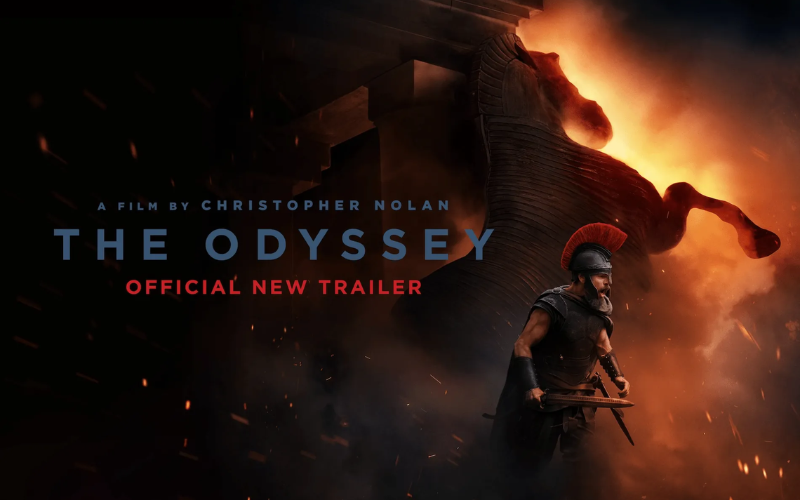
First composed in Homeric Greek around the 8th or 7th century BC, The Odyssey became a cornerstone of ancient literature by the mid-6th century BC.
Now, director Christopher Nolan has reimagined the classic tale as a sweeping, three-hour film.
Released in July 2026, Nolan's adaptation makes bold departures from the original, transforming the mythological fantasy into a grounded psychological drama.
Shot entirely on 70mm IMAX cameras, the film uses towering, high-contrast shots of rugged Mediterranean coastlines and claustrophobic interiors to reflect its protagonist's mental isolation, proving a three-hour runtime can still feel relentlessly kinetic on Nolan's signature cinematic canvas.
In Homer's epic, Odysseus is a cunning strategist who returns to Ithaca disguised as a beggar to spy on the greedy suitors occupying his palace. His faithful dog, Argos, is the first to recognise him before dying peacefully.
Nolan turns that version on its head. Matt Damon stars as a battle-scarred Odysseus haunted by severe post-traumatic stress following the fall of Troy, replacing the silver-tongued trickster with a deeply traumatised warrior.
The poem's legendary mythical encounters are also heavily reworked to fit the film's grounded tone. Homer's Calypso, who imprisons Odysseus for seven years while promising him immortality, is reimagined by Charlize Theron as a compassionate figure who offers lotus flowers to ease his psychological wounds.
Bill Irwin's Cyclops Polyphemus loses the iconic "Nobody" deception, while his giant companions are removed entirely, heightening the realism of the encounter.
Samantha Morton portrays Circe not as a seductive enchantress but as an earthbound sorceress whose magic exposes human greed.
Even the gods are reinvented, with Zendaya's Athena appearing not as a physical deity but as a manifestation of Odysseus' fractured mind, constantly questioning the nature of suffering.
The film also introduces a fear of naval invaders, an idea absent from Homer's poem.
The Sirens no longer lure sailors with irresistible songs. Instead, they force Odysseus to confront a disturbing truth: part of him no longer wants to return home.
That psychological tension is amplified by a relentless, percussive score that mirrors the racing heartbeat of a panic attack, propelling the story even through its dialogue-heavy moments.
This psychological focus dramatically reshapes the famous homecoming. In the original, Odysseus and his son Telemachus secretly hide the suitors' weapons before he wins Penelope's archery contest and massacres the invaders, after which Telemachus hangs 12 unfaithful servant women.
Nolan tempers the brutality. The mass execution is reduced to the hanging of the treacherous handmaid Melantho, while the final decision is left to Penelope, played by Anne Hathaway. The Oscar-winning director also removes the Olympian gods altogether, eliminating Athena's intervention that prevents another war.
The ending marks the film's biggest departure. In Homer's poem, Odysseus proves his identity by describing the immovable bed he carved from a living olive tree, leading to an emotional reunion with Penelope before visiting his ageing father, Laertes.
Nolan removes Laertes entirely, shifting the focus to Telemachus, played by Tom Holland, as the heir to Ithaca. The ending reframes the story as a bleak meditation on how war leaves younger generations to inherit the failures of their elders.
The film concludes ambiguously, with Odysseus and Penelope sailing west to honour his fallen comrades, leaving audiences to decide whether the final voyage is real or a symbolic passage into the afterlife.
Lupita Nyong'o stars in the dual roles of Helen of Troy and her sister, Clytemnestra.
Responding to criticism over a Black actress portraying the legendary Greek figure, Nyong'o brushed off the backlash, saying she had no interest in defending her casting in what is ultimately "a mythological story."
Instead, she said she was drawn to exploring who Helen was "beyond her face."
By portraying both sisters, Nyong'o reinforces the film's reimagining of the epic through a female lens, highlighting the lasting emotional cost of war on those left behind.
Subscribe to our newsletter and stay updated on the latest developments and special offers!