×

The Standard e-Paper
Kenya's Bold Newspaper





Audio By Vocalize
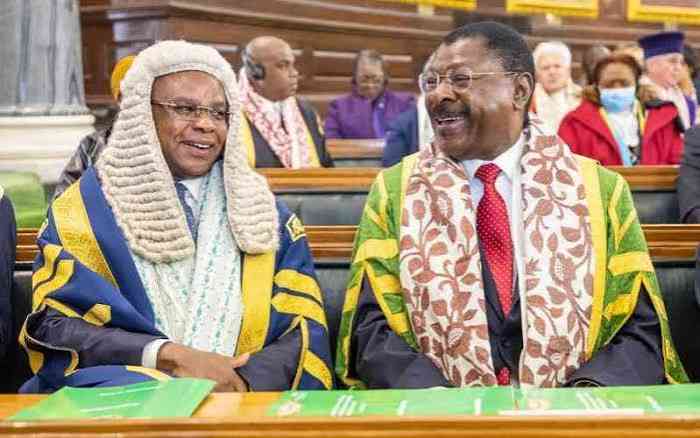
The legal fight over whether Parliament's Speakers can openly campaign for political parties took centre stage Friday as lawyers clashed before the High Court over constitutional limits on their offices.
National Assembly Speaker Moses Wetang'ula and Senate Speaker Amason Kingi urged the High Court to dismiss a petition seeking to bar them from participating in partisan political campaigns, arguing that the Constitution expressly permits elected state officers to engage in politics.
Appearing before Justice David Mburu, lawyers representing the two Speakers, the Attorney General and the Ethics and Anti-Corruption Commission (EACC) maintained that the petition filed by lobby group Vocal Africa was misconceived and that the court lacked jurisdiction to determine the dispute before alternative statutory mechanisms had been exhausted.
Senior Counsel Benson Millimo, appearing for Wetang'ula, argued that the petition should be struck out because the petitioner had failed to first pursue complaints through the Parliamentary Powers and Privileges Committee, the Leadership and Integrity Act mechanisms or the EACC.
Millimo submitted that the Constitution distinguishes between appointed and elected state officers, with only appointed officers barred from holding political office or engaging in political activities.
"The Speaker is an elected state officer and a Member of Parliament. The Constitution itself exempts elected state officers from the restriction against participating in politics," he argued.
He further argued that the conservatory orders sought were politically motivated and intended to prevent Wetang'ula from pursuing his political ambitions.
"The purpose of this petition is to gag Moses Wetang'ula from pursuing his ambition, engaging the public and expressing his political views," Millimo submitted, adding that no public interest would be served by restraining the Speakers from political engagement before the case is fully heard.
Lawyer Antony Njoroge, representing Kingi, echoed the submissions, arguing that Kenya adopted a presidential system of government under the 2010 Constitution rather than the Westminster parliamentary model, where Speakers are politically neutral.
He told the court that the Committee of Experts deliberately settled on a presidential system under which Speakers are members of Parliament affiliated to political parties.
"The Constitution anticipates that the person presiding over Parliament will be a political actor. The Speaker belongs to a political party and is entitled to participate in political activities," Njoroge argued.
He maintained that Article 77(2) of the Constitution only restricts appointed state officers from holding political office, insisting that elected leaders, including Speakers, are constitutionally permitted to participate in politics.
The Ethics and Anti-Corruption Commission also opposed the application, arguing that the petitioner had failed to lodge any complaint with the commission before moving to court.
Counsel for the commission submitted that the Constitution and the Leadership and Integrity Act provide a clear procedure for handling allegations of breaches of leadership and integrity and that the High Court should not be used as the first point of call.
"The petitioner has not demonstrated that they made a complaint to the commission or that such complaint was ignored," the commission submitted, adding that EACC has independent constitutional powers to investigate alleged misconduct without requiring court directions.
The Attorney General, through State Counsel Samuel Kaumba, also raised a preliminary objection seeking to strike out the petition, arguing that disputes touching on alleged violations of Chapter Six of the Constitution should first be handled by the EACC.
Kaumba relied on Supreme Court decisions on the doctrine of constitutional avoidance, submitting that courts should only intervene after available statutory dispute-resolution mechanisms have been exhausted.
He argued that the petitioners had not demonstrated that the alternative mechanisms provided under the Constitution were inadequate or ineffective.
In response, counsel for Vocal Africa defended the petition, arguing that the High Court has original jurisdiction under Articles 22 and 165 of the Constitution to determine alleged violations of constitutional rights and the principles of leadership and integrity.
The lobby maintained that the petition is not merely about leadership and integrity but about preserving Parliament's institutional independence and enforcing the doctrine of separation of powers.
Its lawyers argued that while the EACC may investigate alleged misconduct, it cannot issue constitutional declarations or the conservatory and structural orders sought in the petition.
They insisted that the Speakers' active participation in partisan political campaigns creates a conflict between their constitutional duties and personal political interests, contrary to Articles 10, 73 and 75 of the Constitution.
The case stems from conservatory orders issued earlier by Justice Mburu restraining Wetang'ula and Kingi, pending the hearing of the petition, from using the authority, prestige and influence of their constitutional offices to organise, promote or lead partisan political campaigns.
Justice Mburu reserved his ruling on both the preliminary objections and the applications to set aside the conservatory orders for July 23 at 2.3
Subscribe to our newsletter and stay updated on the latest developments and special offers!