×

The Standard e-Paper
Home To Bold Columnists





Audio By Vocalize
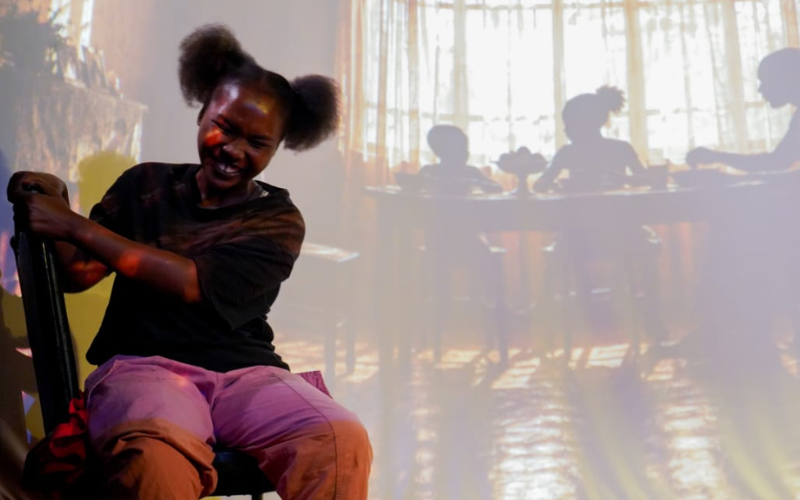
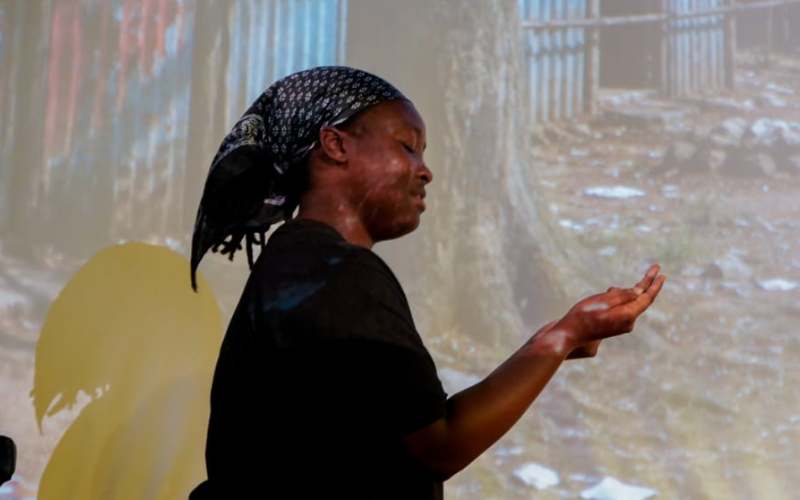
Rooms is a monologue performed by three actors—Gift Nthenya, Rita Gitau, and Afrikan Nduta—who portray the same unnamed character at different stages of her life.
Staged by Monologue Ambassadors on May 24 at Suave Kitchen & Social Club in Westlands, Nairobi, the production brings monologue theatre to the centre stage.
Rooms was written by Eugene Musungu and co-directed by Musungu and Dadson Gakenga.
Through narration, acting, sound, and screen projection, it tells the story of a young woman whose life is turned upside down after the death of her father. Through her journey, it explores identity, grief, silence, belonging, and trauma as an ongoing experience.
The story shows Nthenya playing the character as a young girl in a happy, stable home. She enjoys a loving family and the presence of her father. However, after his death, relatives take over the family’s property, and by the time her mother realises what is happening, the family has lost everything.
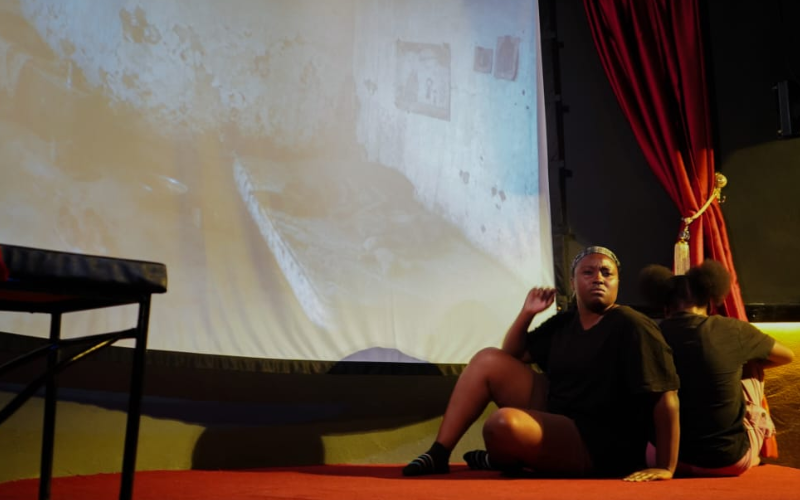
The siblings are then separated, with some sent to live with relatives, while the main character and her youngest sibling are taken to a camp.
As Nthenya exits the stage, Gitau steps into the role for the character’s teenage years in the camp. She learns to make herself small and invisible to avoid being a burden to those around her. Then her youngest sibling dies of malnutrition in their mother’s arms.
Desperate for a way out, she takes her secondary school fees and runs away in search of refuge. She goes back to her hometown of Nakuru hoping to find a home and a sense of belonging, and this is where Nduta comes in to play the role.
However, she discovers that the home she longs for no longer exists in the way she remembers it. Her mother, overwhelmed by loss, dies two years later. She realises that no one is coming to save her and she must take control of her future. The story ends with her leaving Nakuru and not knowing where she is headed.
Monologues are not usually created as full story arcs, as seen in Rooms. They are inserted as brief segments in plays, poetry, spoken word, musicals, and auditions. However, it is finding its way to stand on its own as a theatre form through Monologue Ambassadors, a theatre outfit that recently staged Rooms, with Unsaid scheduled for June.
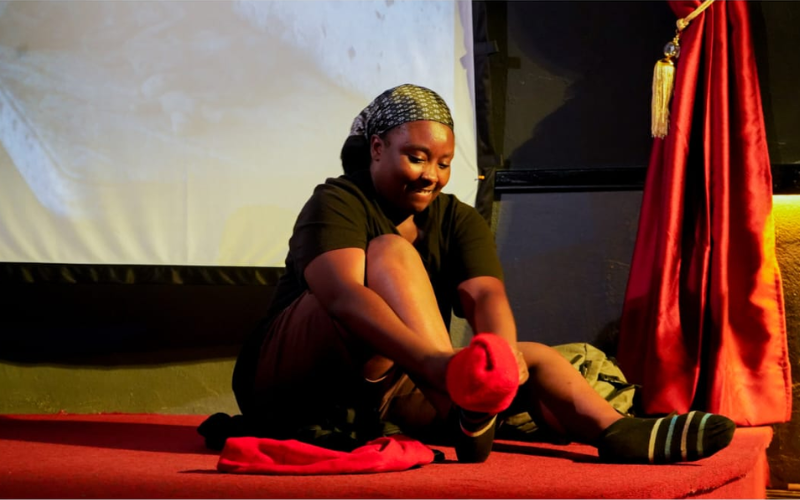
Dadson Gakenga founded it in December 2023 to celebrate his fifth theatre birthday, the anniversary of his first public stage performance.
His inspiration goes back further; in 2019, while studying at a performing arts academy, he watched a monologue showcase by senior acting students. Together with fellow actor Cosmas K. Kirui, he went on to think about a space for monologues.
“I invited actor friends to a small studio and staged a monologue which went live on Instagram. We were six performers. It was intentionally un-themed and experimental, but surprisingly, it gained online traction,” he says.
After the first edition, the project went silent for some time due to inconsistency and limited structure. Then in early 2026, Monologue Ambassadors revived with curated thematic productions and collaborated with writer Eugene Musungu.
Love Edition, a series of monologues, was released online over seven days in February in the lead-up to Valentine’s Day. Then Rooms was their first physical performance with a live audience, and it is its most successful production so far.
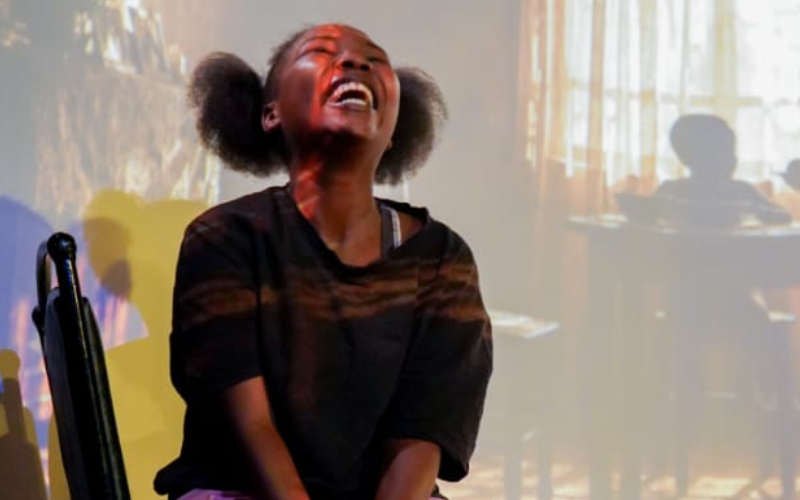
Gakenga explains that any story is worth telling through a monologue, even those that are about light, positive emotions. He adds that its strength is in its intimacy since it doesn’t have scene partners and production spectacle.
“Monologues have the potential to be interactive. The audience entrusts their attention to only one performer because there are no distractions and production spectacle,” he observes.
They are preparing for their next production, Unsaid, which addresses grief, vulnerability, masculinity, and men’s mental wellness to mark the Men’s Mental Health Awareness Month in June.
“Unsaid is about the weight of silence in men. It is about the societal expectations that men go through difficult experiences silently and suppress their emotions,” he says.
Gakenga mentions that he initially created Monologue Ambassadors to provide performance opportunities and increase visibility for actors of his generation who are not actively on jobs, then it became multigenerational, where actors of different experiences come together.
He narrates his journey through auditions, and having gone through the struggle of not always getting roles he wanted, he found solace in monologues.
“When doing monologues, it is not about how suitable you are for the role but how good you are at portraying emotions in the monologue. It is about the basis of a skill,” he says.
The shows are currently entry-free and rely on inadequate resources. However, plans are underway to explore partnerships and sponsorships that would support actors financially and logistically.
“I see Monologue Ambassadors as a base where actors and casting directors come to see performers on stage. I also want to build a community and a studio for actors to come and perform,” he says.
Veteran theatre researcher, director, and actor Steenie Njoroge recalls the few monologue performances that theatre has seen in the 1990s: A Woman Alone performed by Mueni Lundi, Acid Bath Killer performed by Conrad Makeni, and The Fetishist performed by Jacob Otieno.
The Vagina Monologues by V (formerly known as Eve Ensler) and Orgasmo Adulto Escapes from the Zoo by Dario Fo and his wife, Franca Rame, have also been adapted for the stage in recent years. The Kenya International Theatre Festival Trust (KTFest) has been conducting monologue challenges that have culminated in live monologue performances in its annual KITFest festival.
Subscribe to our newsletter and stay updated on the latest developments and special offers!