×

The Standard e-Paper
Join Thousands of Readers





Audio By Vocalize
The forest was alive with birdsong.
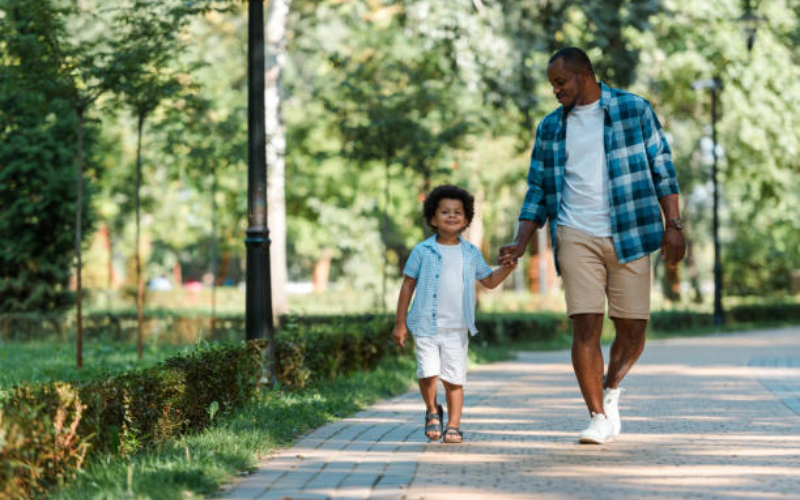
Ahead of me, 16-year-old Edwin Nalentai walked confidently along the winding trail, occasionally stopping to wait for his younger sister, 13-year-old Rita Khai, who was fascinated by almost everything around her: a colourful butterfly, a flowering shrub, or a bird call echoing through the trees. Their father walked between them.
We had come to Entim Sidai Forest in Ngong for what appeared to be a simple family outing. Yet as the morning unfolded beneath the forest canopy, it became clear that something deeper was taking place.
The children were not merely discovering a forest; they were discovering their father.
As he pointed out medicinal plants, spoke about conservation, and explained why certain trees mattered to local communities, snippets of his own story emerged: his values, experiences, and the lessons that had shaped him. This is perhaps one of the quiet gifts of travel. Somewhere between the departure point and the destination, people reveal parts of themselves that everyday life often keeps hidden.
As Father’s Day approaches today, I find myself reflecting on several journeys I have witnessed over the years, journeys involving fathers and children sharing experiences, conversations, and memories. Whether on a forest trail, a hilltop, a beach, or a family homecoming, the destinations matter. These relationships matter more.
At Entim Sidai, the pace of life slowed. Away from school schedules, work commitments, and digital distractions, father and children had time to talk. Questions flowed naturally.
Why do certain trees survive drought? How do animals find water? What happens when forests disappear? The answers were rarely simple, yet the conversations themselves seemed important.
“Many fathers spend years providing for their children but surprisingly little time simply walking beside them,” said Samuel Nalentai, Edwin’s father, as we walked down the therapeutic nature trails of Entim Sidai Forest.
A trail, he had learned, creates something modern life often struggles to provide, uninterrupted time.
Suddenly, the forest became a classroom, not because anyone intended to teach, but because learning happened naturally. Edwin learned about nature, but perhaps more importantly, he learned about the man walking beside him, his father.
On another journey, I found myself climbing Leopard Hill in the Maasai Mara. The experience remains one of the most imaginative guided hikes I have encountered.
The hill was presented not simply as a hill, but as a leopard’s home. Each level revealed another chapter in the story. Each bend in the trail invited curiosity. Each viewpoint rewarded patience.
What stood out was watching fathers and sons navigating the climb together. The steep sections demanded effort, and the heat tested endurance. Conversations came in short bursts between breaths.
Yet something shifted. Titles disappeared. The father was no longer simply the provider, and the son was no longer simply the child. They became climbing partners, explorers and adventurers.
By the time they reached the summit, they had shared more than a physical challenge. They had shared an experience. And experiences have a way of creating memories that linger long after photographs are forgotten.
Not all meaningful journeys take place in forests or conservancies. Some happen much closer to home.
I recall a homecoming gathering at Coolstream Entertainment Facility in Meru, where families had gathered to celebrate roots, friendships, and community. Among them was a father introducing his children to people and places that had shaped his early life.
Every few minutes another story emerged, a childhood prank, a favourite teacher, memories of a football match, and lessons learned from an elder. The children listened with growing fascination as they discovered a different side of their father.
For perhaps the first time, they were seeing him not simply as Dad, but as a young boy who once had dreams, fears, adventures, and ambitions of his own.
Such moments matter. Children often know their parents only through the lens of adulthood. Journeys into family history help reveal the chapters that came before.
One of the most touching moments I have witnessed involved a father attending an important church programme for his daughter, marking a milestone in her faith journey. The CITAM Ngong programme held at a Mombasa beach hotel was itself memorable.
The music, prayers, and celebrations created a powerful occasion, but what stayed with me was something simpler, the father’s presence.
In a world where many parents are constantly pulled in different directions, showing up matters. The daughter may not remember every speech delivered that day, but she will remember that her father was there, supporting, encouraging, and witnessing an important moment in her life.
Sometimes love is expressed through words, and sometimes through presence.
Then there was the father who spent a day exploring Hell’s Gate with his three daughters. Cycling, walking, laughing, stopping for photographs, and sharing stories. At first glance, it looked like a typical family outing.
Yet as the day progressed, something more significant unfolded. The daughters learned confidence, and the father learned patience. The family created shared memories.
The outing challenged the idea that fathers connect most naturally with sons. Daughters need present fathers too. In many cases, fathers discover some of life’s most meaningful moments simply by spending time with their daughters.
Reflecting on these journeys, I realise they were never really about forests, beaches, hills, or parks. They were about conversations, stories, experiences, and connection.
Travel creates opportunities to step away from routine and engage with one another differently. A father explaining a tree species during a hike may also share a life lesson. A road trip may unlock family stories long left untold. A homecoming may reconnect children to their roots, while a simple walk may become a lifelong memory.
The destinations provide the setting. The relationships provide the meaning.
As our walk through Entim Sidai came to an end, Edwin and Rita continued talking with their father. The trail was ending, but the conversation was not.
Watching them disappear around the final bend, I was reminded that some of the most important journeys parents take with their children are not measured in kilometres, but in moments, in questions answered, stories shared, and memories created.
Perhaps that is the true gift of travelling together, not that children discover new places, but that they discover the people they are travelling with, including the fathers they thought they already knew.
Subscribe to our newsletter and stay updated on the latest developments and special offers!